
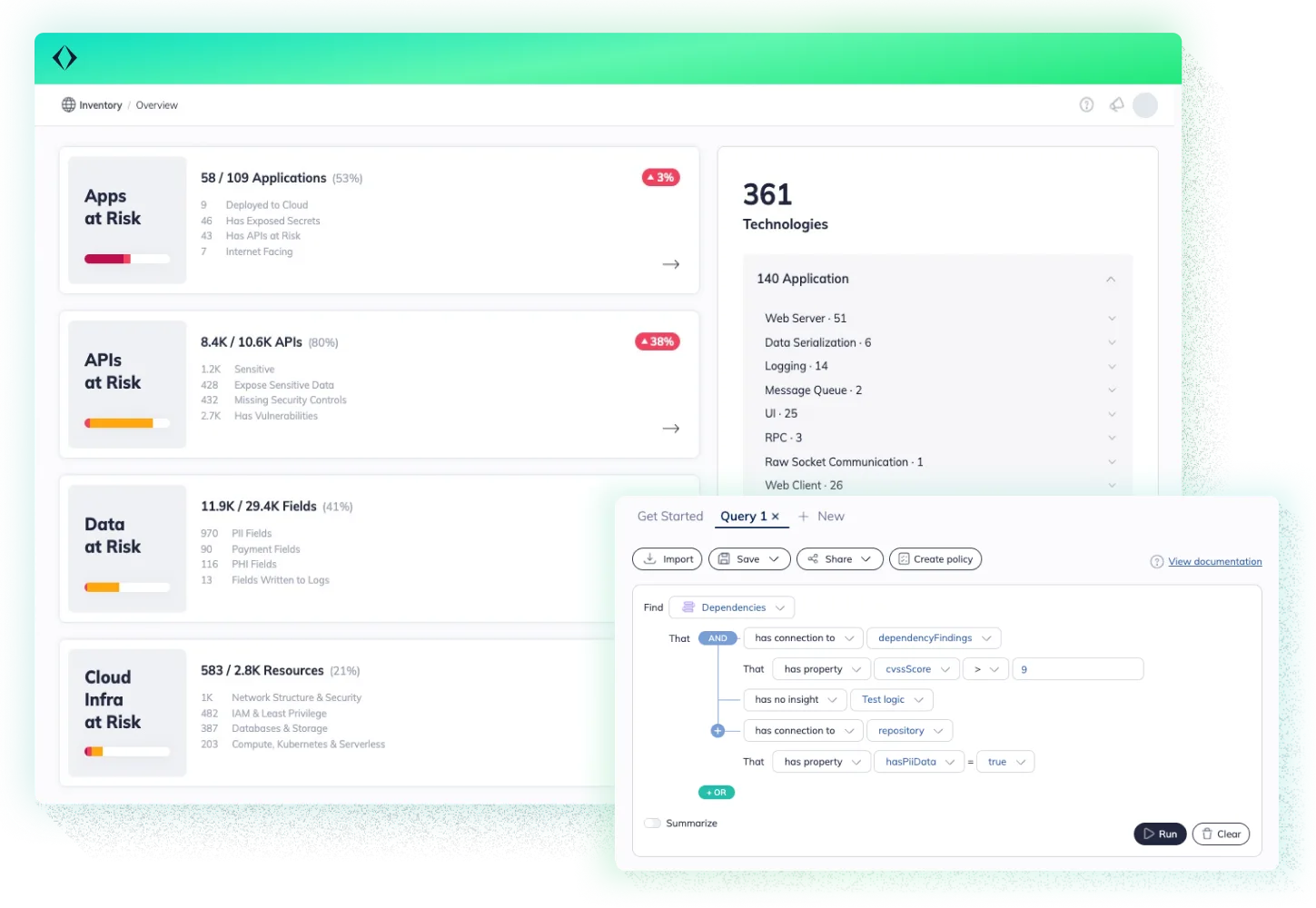
Apiiro ranked #1 for the ASPM use case in Gartner’s 2025 Critical Capabilities for Application Security Testing. The ASPM platform uses Deep Code Analysis (DCA) and a proprietary Risk Graph for code-to-runtime context, catching material changes that introduce risk even when no scanner fires an alert.
The company raised $135M total, including a $100M Series B in 2022 led by General Catalyst. Customers include USAA, BlackRock, Shell, SoFi, Cloudera, and Equinix.
Also recognized as a Leader in the IDC MarketScape for ASPM and ranked #1 for Innovation in the Frost Radar for Global ASPM (both 2025).
What is Apiiro?
Apiiro splits into three phases, each targeting a different stage of the development lifecycle:
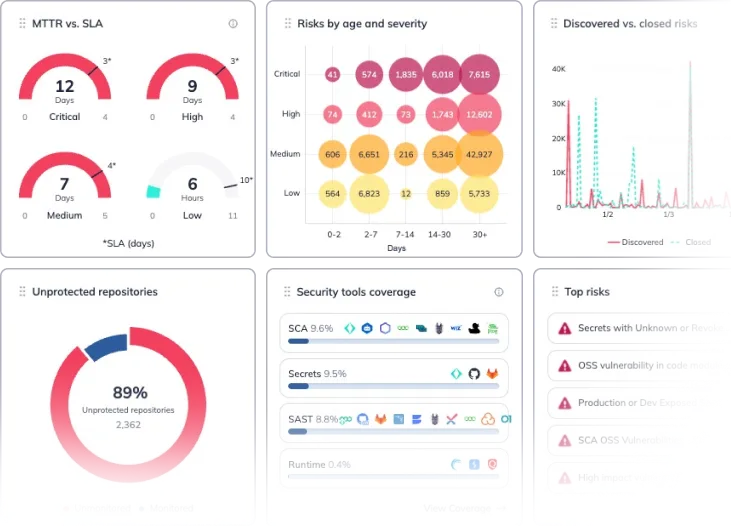
The platform is tool-agnostic. It aggregates findings from whatever SAST, DAST, and SCA tools you already run, then layers Risk Graph context on top to figure out which findings actually matter.
Key features
Deep Code Analysis
Deep Code Analysis builds an abstract representation of how code actually behaves, not just what it looks like syntactically. It traces data flows across function and service boundaries, spots business logic patterns (authentication, payment processing, PII handling), and flags behavioral changes even when the diff looks minor.
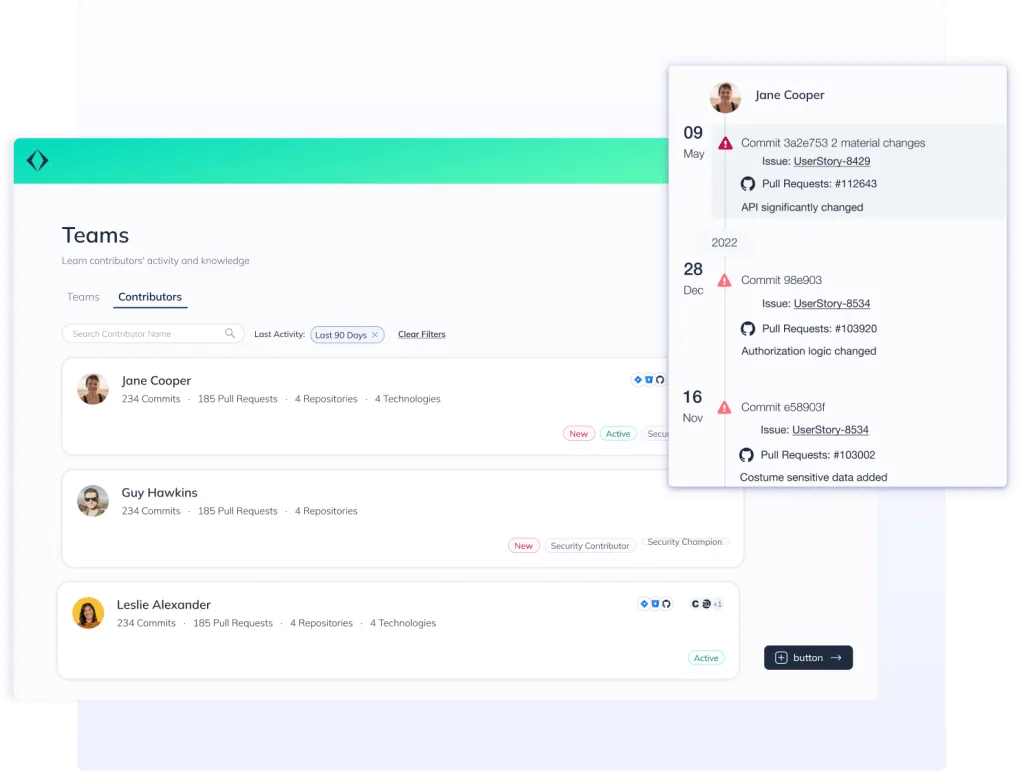
Material Change Detection separates high-risk changes from routine refactoring. A rename that touches 200 files won’t trigger the same response as a 3-line change to your authentication flow.
Traditional SAST scans for known vulnerability patterns in source code. Apiiro’s DCA understands code behavior and flags material changes that shift risk, even when no vulnerability pattern matches.
A new API endpoint that exposes PII gets flagged based on what it does, not because it matches a regex.
Risk Graph
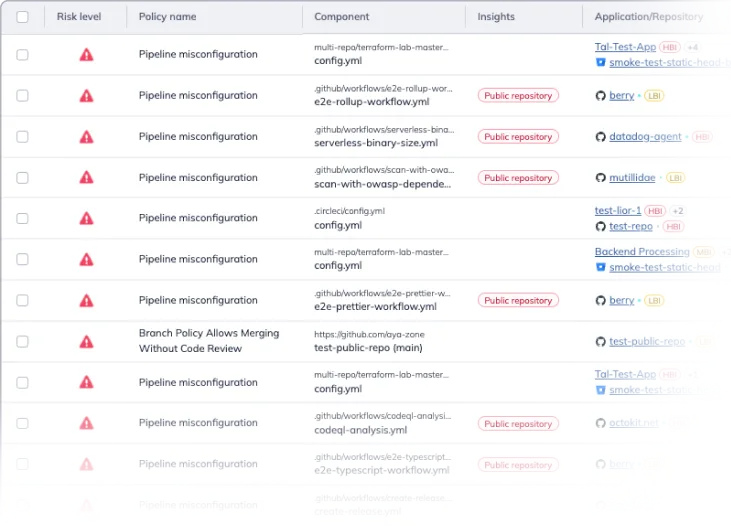
The Risk Graph ties together code (repositories, branches, commits, functions, data flows), infrastructure (build pipelines, deployment targets, runtime environments), and people (developers, reviewers, approvers) with business context like data sensitivity and internet exposure.
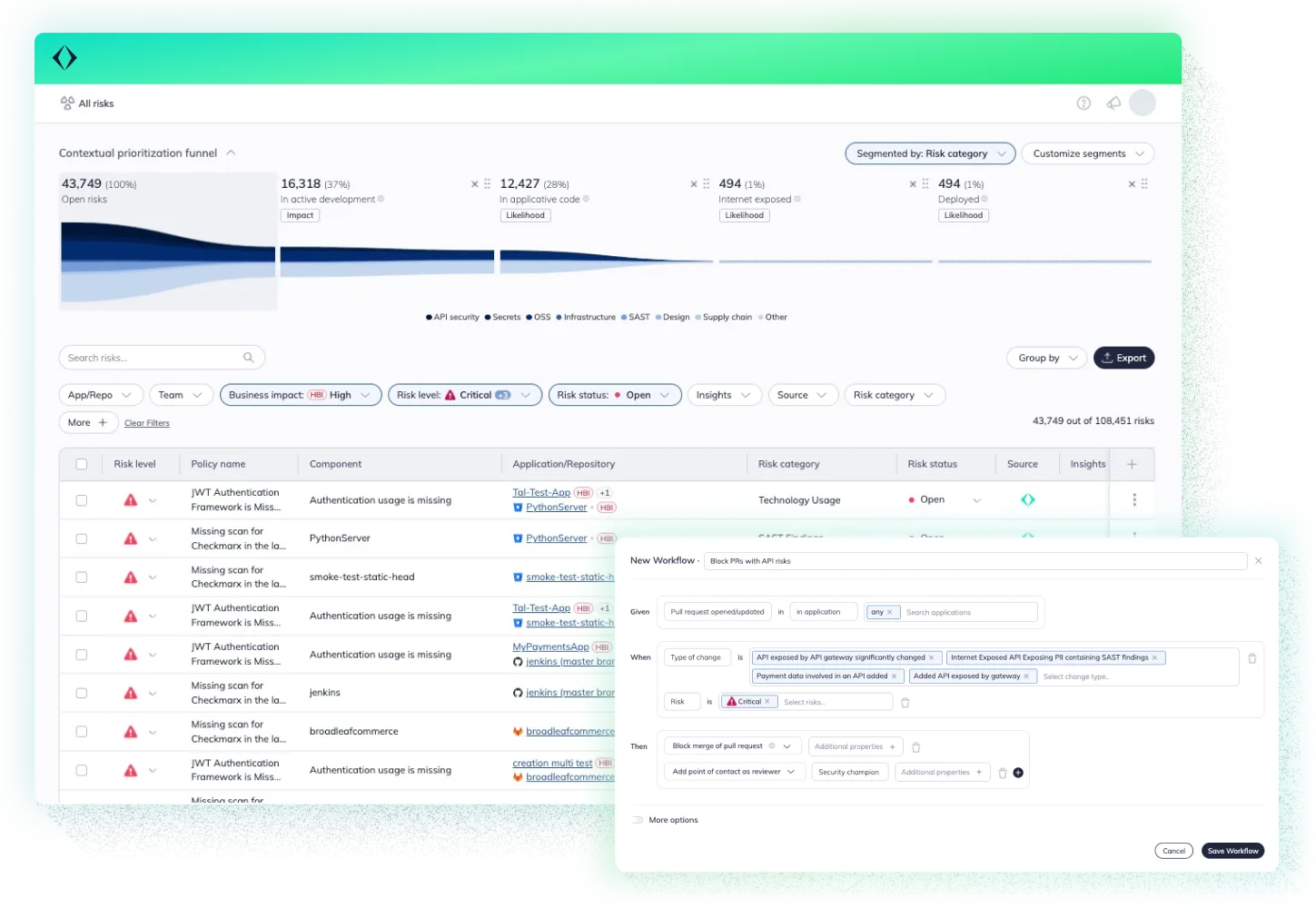
You can query it in natural language:
| Query | What it returns |
|---|---|
| “Changes to PII handling code in the last 30 days” | All commits touching sensitive data flows, with authors and review status |
| “Path from this CVE to internet-exposed endpoints” | Dependency chain showing if the vulnerable code is reachable from production |
| “Unreviewed commits to authentication modules” | Commits to auth code that bypassed code review, ranked by risk |
Software supply chain security
XBOM (eXtended Software Bill of Materials) goes past standard SBOM with full visibility into applications and supply chains:
- Transitive dependency mapping across the full dependency tree
- Behavioral analysis of dependency updates (detecting suspicious changes)
- Dependency confusion risk detection
- License compliance tracking
- SBOM generation and maintenance
AI agents
AutoFix agents generate fixes across design, code, and delivery phases. The Guardian Agent watches AI-generated code for security problems before it hits production, applying the same DCA and risk context to code written by Copilot, Cursor, or other AI assistants.
Integrations

 GitHub
 GitLab
 Bitbucket
 Azure DevOps
GitHub Actions
GitLab CI
Azure DevOps
GitHub Actions
GitLab CI Jenkins
 CircleCI
Azure Pipelines
CircleCI
Azure Pipelines Buildkite
 AWS
AWS Azure
Azure GCP
GCP Kubernetes
 Jira
Jira ServiceNow
Getting started
When to use Apiiro
Apiiro is built for enterprises already drowning in scanner findings. If you’re tracking code risk over time, managing complex supply chains, or need compliance evidence across the development lifecycle, that’s where Apiiro earns its keep.
It sits on top of your existing security tools and uses code intelligence to filter signal from noise.
Smaller teams with simple codebases where manual review still works, or organizations that need scanning capabilities rather than aggregation, should look at tools like Aikido or Jit instead.
Note: Raised $135M total funding ($100M Series B in 2022 led by General Catalyst).