


InsightAppSec is Rapid7’s DAST platform for testing modern web applications. Two features set it apart: the Universal Translator, which normalizes traffic from JavaScript frameworks like React, Angular, and Vue into a consistent format for testing, and Attack Replay, which lets developers verify findings locally without running a full scan.
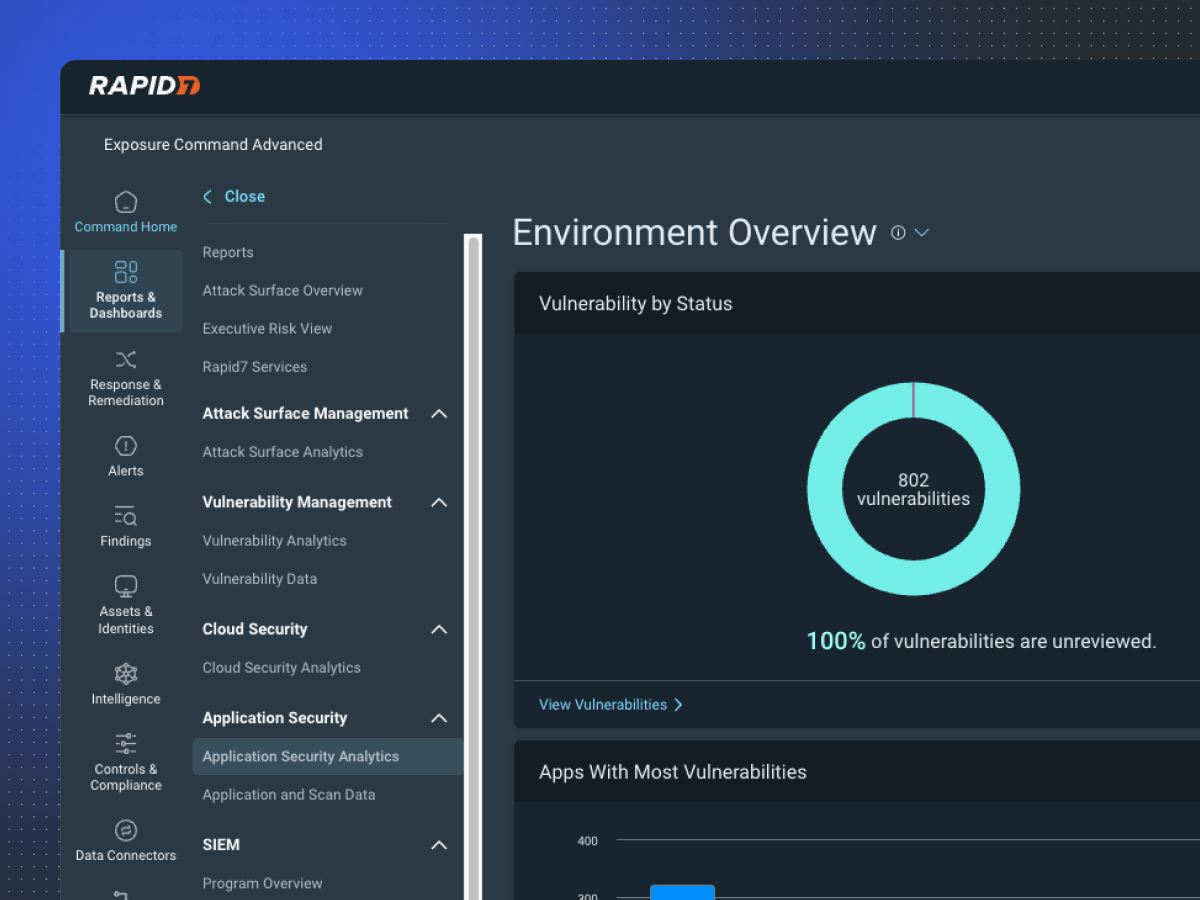
Tests for 95+ vulnerability types. Runs on cloud or on-premise scan engines. Concurrent multi-target scanning at no additional cost.
Recently added LLM vulnerability scanning for AI-integrated applications.
Key features at a glance
| Feature | Detail |
|---|---|
| Attack Types | 95+ including OWASP Top 10, business logic, config issues |
| Universal Translator | Normalizes React, Angular, Vue.js traffic for testing |
| Attack Replay | Developers verify findings locally without full scan access |
| LLM Scanning | Tests AI-integrated apps for prompt injection, data leakage |
| GraphQL Testing | Dedicated GraphQL API scanning support |
| Scan Engines | Cloud-hosted and on-premise (v7.5 latest) |
| Concurrent Scanning | Multiple targets simultaneously, no extra cost |
| Compliance Reports | PCI-DSS, HIPAA, OWASP Top 10, SOX |
| Report Formats | Interactive HTML, static HTML, CSV, PDF |
| Scheduling | Recurring scans with blackout window support |
What is InsightAppSec?
Traditional DAST tools struggle with JavaScript-heavy applications that render content dynamically and manage state client-side.
According to the OWASP Testing Guide, testing modern SPAs requires a crawler that executes JavaScript and tracks client-side state changes.
InsightAppSec’s Universal Translator addresses this by normalizing traffic from various frameworks into a consistent format for security testing.
The tool crawls applications using a real browser, executes JavaScript, tracks state changes, and discovers REST endpoints called by the frontend. This gives it broader coverage than crawlers that only process static HTML.
The Universal Translator doesn’t care which JavaScript framework you use. React, Angular, Vue.js, Ember, Backbone — it normalizes all of them into the same internal format.
This means InsightAppSec’s attack modules work consistently regardless of frontend technology.
| Capability | Details |
|---|---|
| Universal Translator | Normalizes traffic from React, Angular, Vue.js, and other JavaScript frameworks. Executes JS, tracks state changes, and discovers API endpoints called by the frontend. |
| Attack Replay | Each finding comes with a replay package — HTTP request, reproduction steps, evidence screenshots, and fix guidance. Developers verify bugs locally without needing DAST tool access. |
| 95+ Attack Types | Covers injection (SQL, LDAP, XPath, command), XSS (reflected, stored, DOM-based), auth flaws, authorization issues, config problems, and business logic vulnerabilities. |
Attack Replay
Attack Replay is the feature that security teams actually thank Rapid7 for. It addresses the friction between security and development — the “is this a real bug?” conversation that slows down remediation.
When InsightAppSec finds a vulnerability, it packages up everything a developer needs to verify it:
- The exact HTTP request that triggered the finding
- Step-by-step reproduction instructions
- Evidence (screenshots, response data)
- Remediation guidance
Developers run the replay against their local environment. If they can reproduce it, they fix it.
No back-and-forth with the security team about whether the finding is valid.
LLM vulnerability scanning
InsightAppSec added scanning for LLM-integrated applications. If your web app uses an AI model (ChatGPT API, Claude API, etc.), the scanner tests for:
- Prompt injection attacks
- Data leakage through model responses
- Unauthorized access to model capabilities
- Input validation bypasses specific to LLM interfaces
The OWASP Top 10 for LLM Applications identifies prompt injection as the top risk for AI-integrated systems. This is a newer addition and the DAST market is still figuring out what LLM testing should look like, but InsightAppSec is one of the first to ship it.
Scan management
The platform includes operational controls for enterprise deployments:
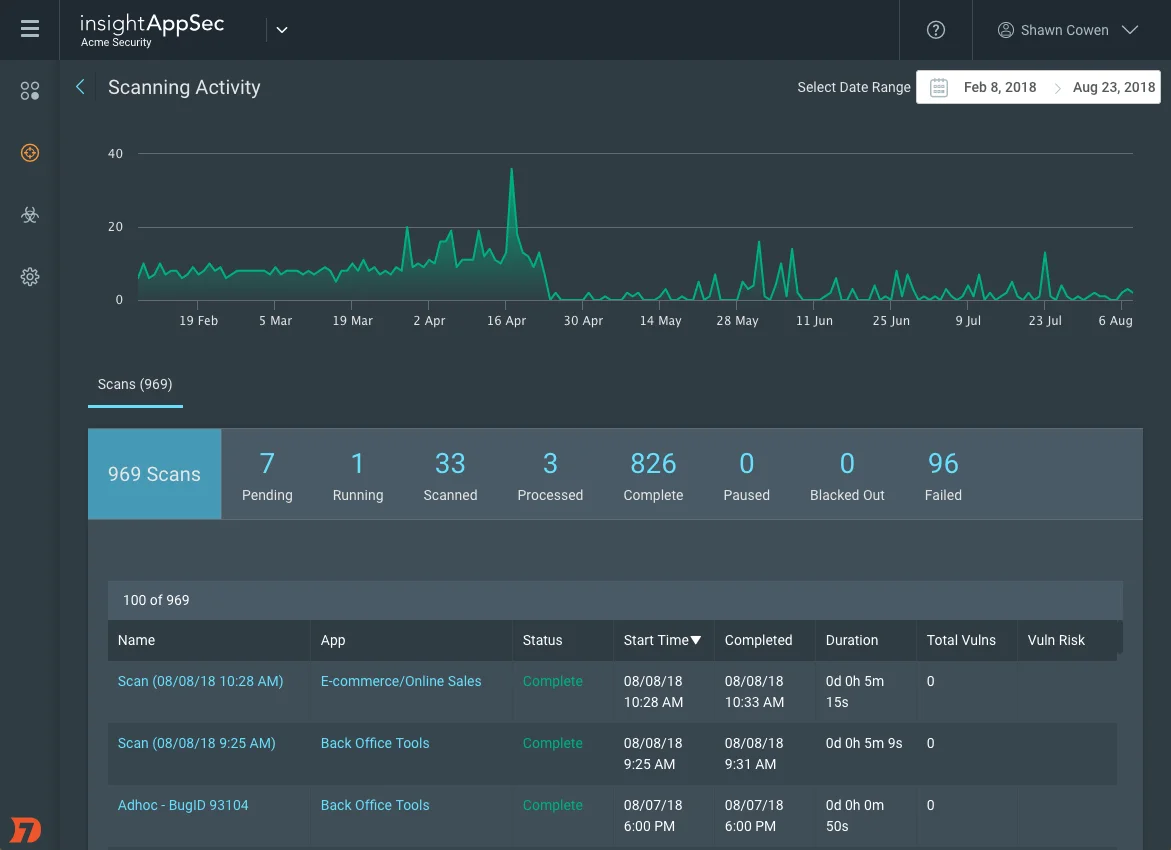
- Scheduling: Recurring scans during off-peak hours
- Blackout windows: Prevent scanning during critical business periods
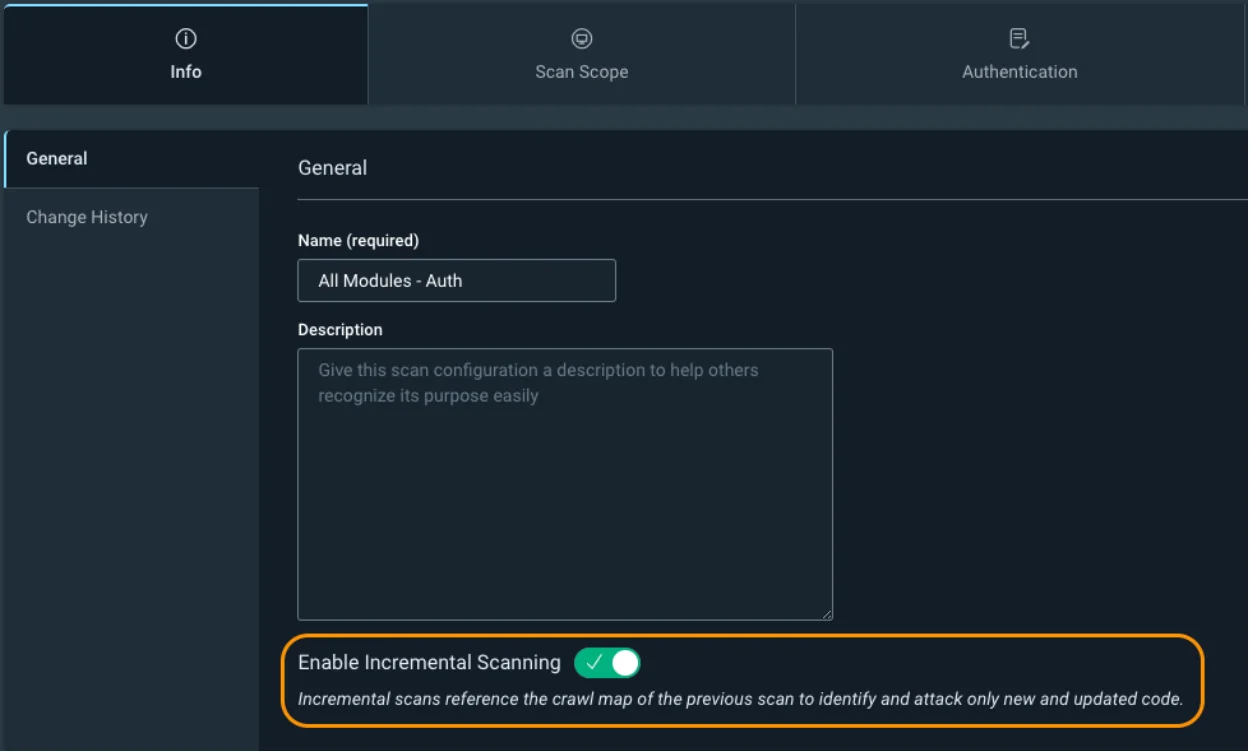
- Incremental scanning: Re-test only changed portions of applications
- Rate limiting: Throttle scan traffic to prevent performance impact
- Concurrent scanning: Multiple targets simultaneously at no extra cost
How to use InsightAppSec
- Create an app in the Rapid7 Insight Platform — Navigate to InsightAppSec, click New App, and provide the target URL and application details.
- Configure authentication — Set up form-based login, HTTP Basic, bearer token, or record a macro for complex multi-step auth flows using the Traffic Recorder.
- Select scan template — Choose Default, OWASP Top 10, PCI, or a custom template. Configure scan scope and rate limits.
- Run and review — Launch scans on-demand or schedule recurring runs. Review findings with Attack Replay packages for developer-friendly verification.
CI/CD integration
# GitHub Actions
name: InsightAppSec Scan
on:
  push:
    branches: [main]

jobs:
  dast-scan:
    runs-on: ubuntu-latest
    steps:
      - name: Start InsightAppSec Scan
        run: |
          curl -X POST "https://us.api.insight.rapid7.com/ias/v1/scans" \
            -H "X-Api-Key: ${{ secrets.RAPID7_API_KEY }}" \
            -H "Content-Type: application/json" \
            -d '{"scan_config": {"id": "${{ vars.CONFIG_ID }}"}}'
InsightAppSec also integrates with Jenkins pipelines and GitLab CI via the REST API.
What does Rapid7 InsightAppSec integrate with?
These integrations are how I plug InsightAppSec into a broader DevSecOps workflow — alongside other enterprise options in the DAST tools landscape like Invicti , with results pushed to Jira and ServiceNow so triage stays inside the existing ITSM workflow.
 InsightVM
InsightConnect
InsightIDR
InsightVM
InsightConnect
InsightIDR GitHub Actions
 Jenkins
 Jira
Jira ServiceNow
Managed service option
Rapid7 offers a managed application security service where their team operates InsightAppSec on your behalf. They handle application onboarding, scan scheduling, vulnerability triage, and monthly reporting. This option suits organizations that lack dedicated appsec staff.
When to use InsightAppSec
InsightAppSec works well for teams with modern JavaScript applications who want developer-friendly vulnerability verification. The Universal Translator handles SPA complexity, and Attack Replay removes friction from the remediation workflow.
Good fit when you need:
- DAST for React, Angular, or Vue.js applications
- Developer-friendly vulnerability verification (Attack Replay)
- LLM vulnerability scanning for AI-integrated apps
- Integration with Rapid7’s broader security platform (SIEM, VM, IR)
- Flexible deployment (cloud or on-premise scan engines)
- Managed service option for teams without dedicated appsec resources
Existing Rapid7 customers get the most value from platform integration and unified reporting.
Teams that don’t use other Rapid7 products should compare InsightAppSec against standalone DAST tools like Invicti or Acunetix on scanning depth and price. For developer-focused alternatives, StackHawk is worth evaluating.
To understand how DAST compares to other testing methods, see the SAST vs DAST vs IAST guide.
InsightAppSec pricing
Rapid7 does not publish list prices on rapid7.com for InsightAppSec. Paid licenses are quoted by sales after a scoping conversation, with separate pricing paths for the SaaS scanner, on-premises scan engine, and the optional managed application security service.
What drives cost is the application count under scan, the cloud vs on-premise scan engine mix, whether you bundle InsightAppSec with the rest of the Insight platform (InsightVM, InsightIDR, InsightConnect), and whether you opt into the managed service. Verify your own quote with Rapid7 before budgeting; for a buyer-side view of typical AppSec contract sizes, see the AppSec tools pricing guide .
I treat InsightAppSec as upper-mid-market enterprise pricing — it sits in the same band as Invicti rather than budget scanners. If you need a published-price option in the DAST tools landscape , StackHawk or open-source ZAP are easier to defend in procurement.
InsightAppSec alternatives
If InsightAppSec’s pricing posture or Rapid7 ecosystem fit does not work, these are the alternatives I’d weigh in the DAST tools landscape :
- Invicti — Enterprise DAST with proof-based scanning that confirms each finding via safe exploitation. Better fit when false-positive elimination is the binding constraint and ASPM-style rollups matter.
- Veracode DAST — Enterprise platform that bundles DAST with SAST and SCA on a unified dashboard. Worth evaluating when your buyer profile is enterprise software security with FedRAMP-class compliance pressures.
- Qualys WAS — Cloud-native web application scanning from a vendor your operations team probably already uses for vulnerability management. Lower friction when Qualys is the incumbent platform.
- Burp Suite Enterprise — Scaled DAST around the Burp engine with PR-blocking gates. Verify pricing on portswigger.net before budgeting. Pairs well when your security researchers already live in Burp Pro.
- StackHawk — CI-native DAST around the ZAP engine with stronger developer ergonomics than enterprise platforms. Better when engineering owns the security pipeline directly.